Dreyfus and Picquart reinstated in the army
An Officer and a SpyThe restoration of Alfred Dreyfus and Georges Picquart to the army in July 1906 turned a legal victory into an official military reversal. After years in which Dreyfus had been branded a traitor and Picquart punished for challenging the case against him, the Chamber of Deputies voted to restore them both. The paired resolutions repaired their military standing, but the long delay and the manner of their return also preserved the history of how the army had treated them.
The Reversal That Preceded Restoration
Dreyfus’s return followed the Court of Cassation’s decision on 12 July 1906 to quash the Rennes verdict and exonerate him entirely. The result came after a drawn-out reconsideration rather than a single triumphant courtroom moment. In 1903, Jean Jaurès delivered a day-and-a-half speech in the Chamber of Deputies setting out the affair; General André then agreed to examine the evidence. The André inquiry led the Criminal Chamber to take up the case and recommend review by the Supreme Court of Appeal. Political turmoil over the separation of Church and State delayed the process through 1905. The eventual exoneration therefore rested on facts reconsidered across years and institutions.
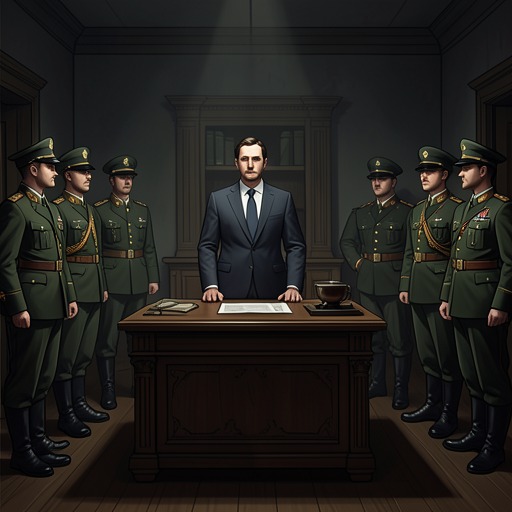
The wrong that the reversal addressed had been made public through ritual as well as judgment. At Dreyfus’s degradation, four thousand men stood on the parade ground as an escort brought the condemned captain forward. He was sentenced to lifelong deportation to a fortified enclosure, discharged from the army, and publicly declared unworthy to bear arms. His torn uniform and escorted march before the assembled detachments made the army’s verdict visible; as he protested his innocence, members of the crowd jeered at him with antisemitic abuse. The seven-minute procession was brief, but it was staged so that soldiers would remember how the army dealt with a traitor. In 1906, restoration answered that public display with a different military judgment.
From Contested Evidence to Public Appeal
The official case had been protected from scrutiny at crucial points. At Dreyfus’s trial, the prosecutor sought a private hearing because the evidence supposedly concerned national defence; his counsel objected that Dreyfus had the right to the same treatment as any other accused person. Later, when Picquart was told to investigate Charles Ferdinand Walsin Esterhazy, Charles-Arthur Gonse instructed him to leave the Bordereau out of the inquiry. When Picquart challenged the inquiry’s limits by pointing to evidence that Esterhazy had written it and to falsified material in the dossier used to convict Dreyfus, the response was that these matters fell outside its scope.
Picquart ultimately appealed beyond the military inquiry. After the Minister of War had cited secret documents in the Chamber of Deputies, Picquart and Fernand Labori drafted an open letter to Prime Minister Henri Brisson. The letter stated that two documents dated 1894 could not be applied to Dreyfus and that a document dated 1896 showed signs of forgery. It presented Picquart’s willingness to establish those points before a competent tribunal as a duty, directly contesting the use of secret evidence in public political argument. The later restoration thus followed not only judicial review but years of conflict over who could examine the evidence and what the institutions would permit them to discuss.
The Votes of 13 July
On 13 July, a motion to restore Dreyfus to the army as a major and award him the Legion of Honour passed in the Chamber of Deputies by 432 votes to 32. The Legion of Honour was the highest distinction available. When Auguste Mercier tried to oppose the motion in the Senate, the chamber shouted him down: a former advocate of the army’s case could no longer prevent the parliamentary reversal from being enacted.
A second motion restored Picquart to the rank he might have expected to achieve had he not been dishonourably discharged in 1898. It passed by the still larger margin of 449 to 26. The separate votes recognized two different injuries: Dreyfus’s conviction and expulsion from the army, and Picquart’s removal after he pursued evidence that threatened the official account. Their restoration was connected, but it did not erase the distinct routes by which each man had lost his standing.
Ceremony and Aftermath
Picquart was astonished to find himself back on the parade ground of the École Militaire, this time in the uniform of a brigadier general, attending Dreyfus’s medal ceremony. The setting recalled the place where Dreyfus had been publicly degraded, but the uniforms and official recognition now marked a reversal. The army’s public ceremony could not restore the years taken from either man; it could, however, make their renewed military status visible where the earlier punishment had been staged.
The restoration was one stage in a longer return to public life. On 25 October, Georges Clemenceau became prime minister. Picquart, then in Vienna with Pauline, received a telegram from Clemenceau naming him Minister of War and ordering him to return to Paris. The former officer whom the army had discharged for challenging its conduct was thus called back to lead the ministry responsible for it. That appointment did not make the restoration a simple or complete reconciliation: it underscored how far the official position had changed, while leaving the history of institutional resistance in view.